Science Techbook

I led the design strategy for Science Techbook, one of Discovery Education’s flagship products, supporting its successful adoption across major markets including Texas and Florida. Beginning with a deep analysis of the existing information architecture, I restructured the experience to improve clarity, scalability, and usability across complex educational requirements. I developed flexible design systems and repeatable patterns to address challenges such as grade-band differentiation and clearly communicating pedagogy to diverse stakeholders. Science Techbook represents a significant portion of Discovery Education’s business, contributing approximately $100M annually.
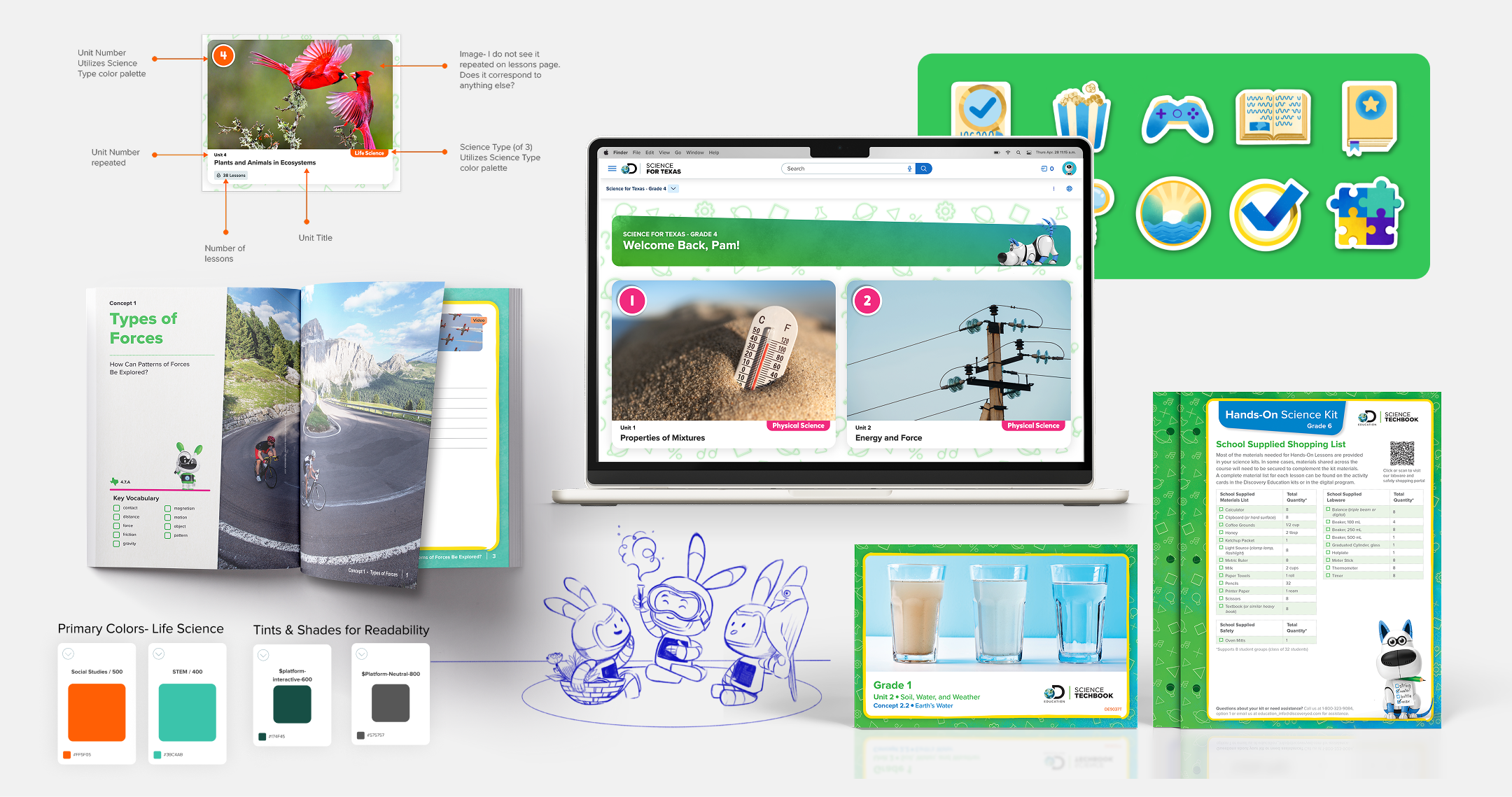
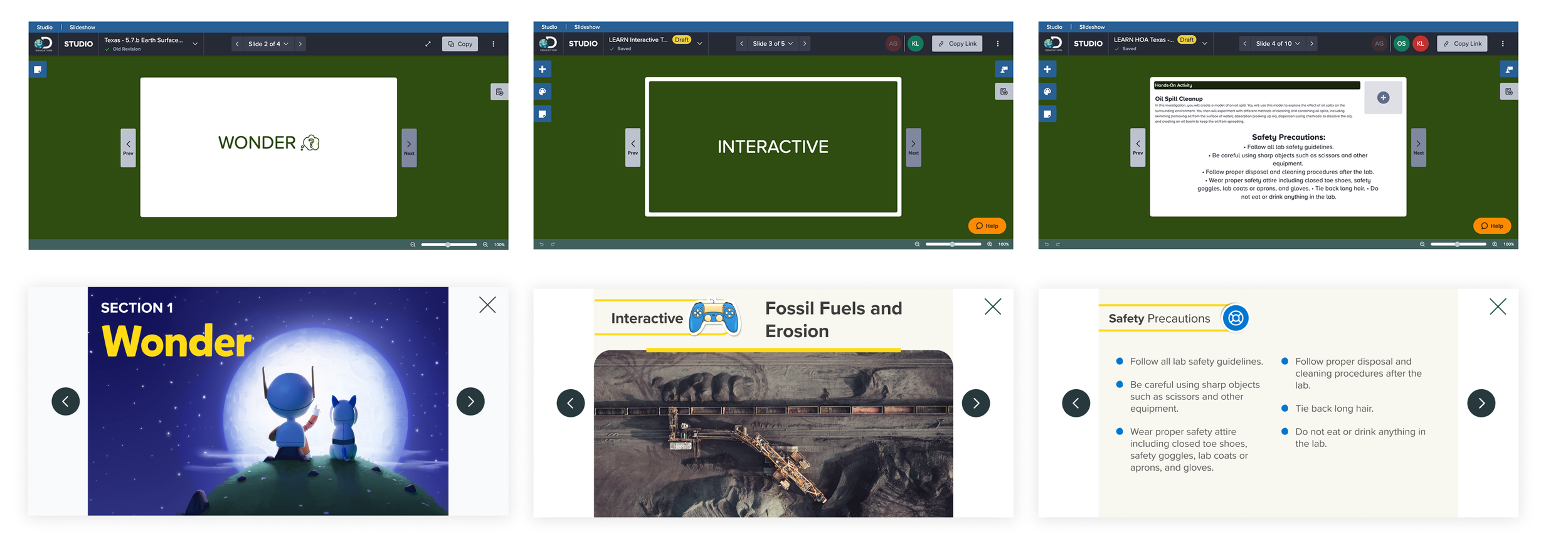
Before & After
Before and after shots speak a thousand words when it comes to major design improvements, so before we dive into Information Architecture and how it shaped the Design Systems, let’s take a look.

Those aren’t wireframes on the top row- that is actually the product that was intended to go out to customers.
So, how did we get there?
I started by analyzing the existing pedagogy.
How was a lesson currently laid out and where did a lesson fit in the overall information architecture of the program as a whole?
Was design adapted for each of the three grade bands?
How were the three sciences distinguished visually?
How did a teacher move through a lesson, and how much time did they have for science instruction each week?
Lesson Pedagogy & Structure
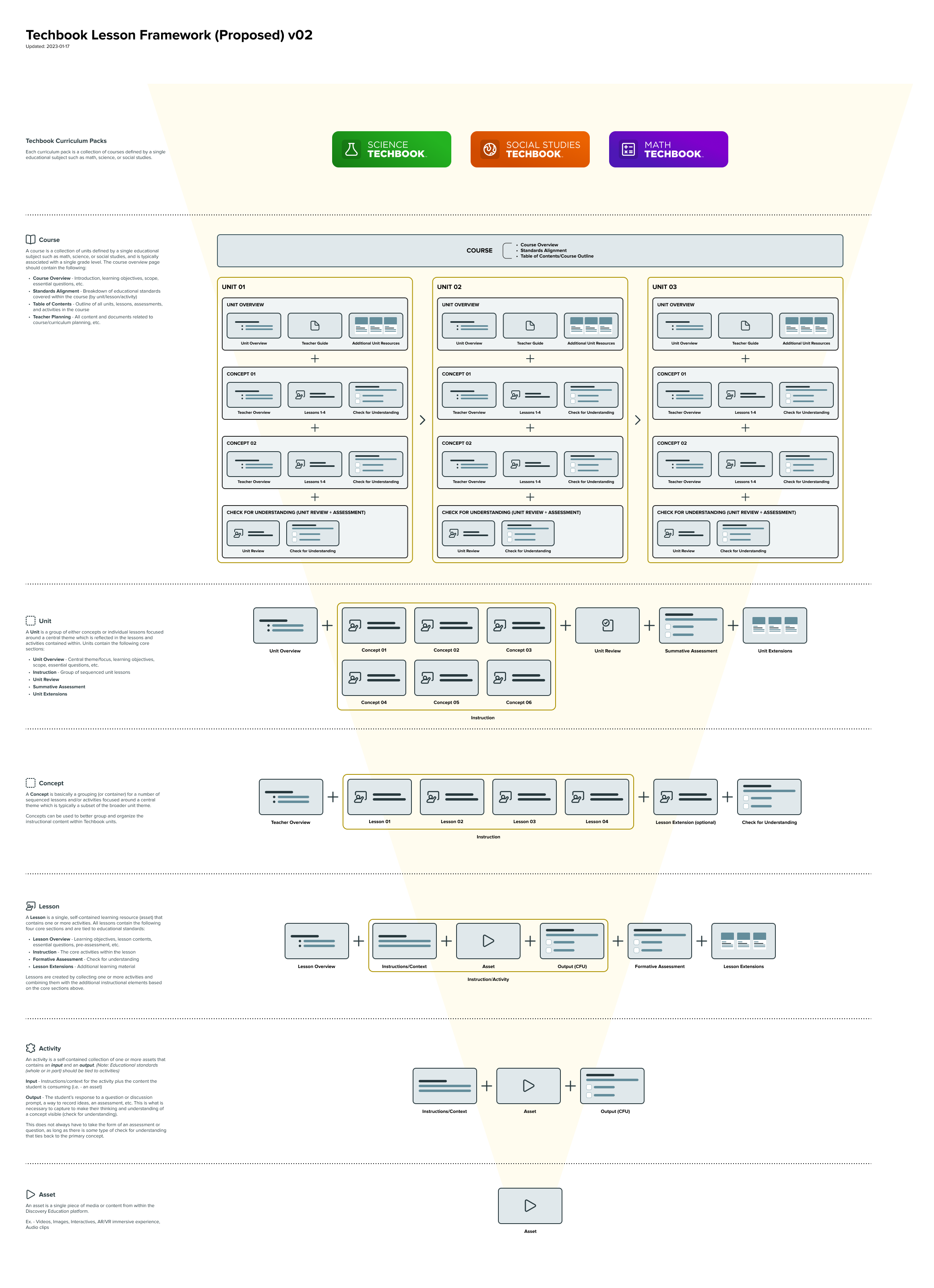
Working with the Lead Product Designer and consulting with the Curriculum Team we laid out the lesson structure gaining deep insight into the flow of how the lesson was taught.
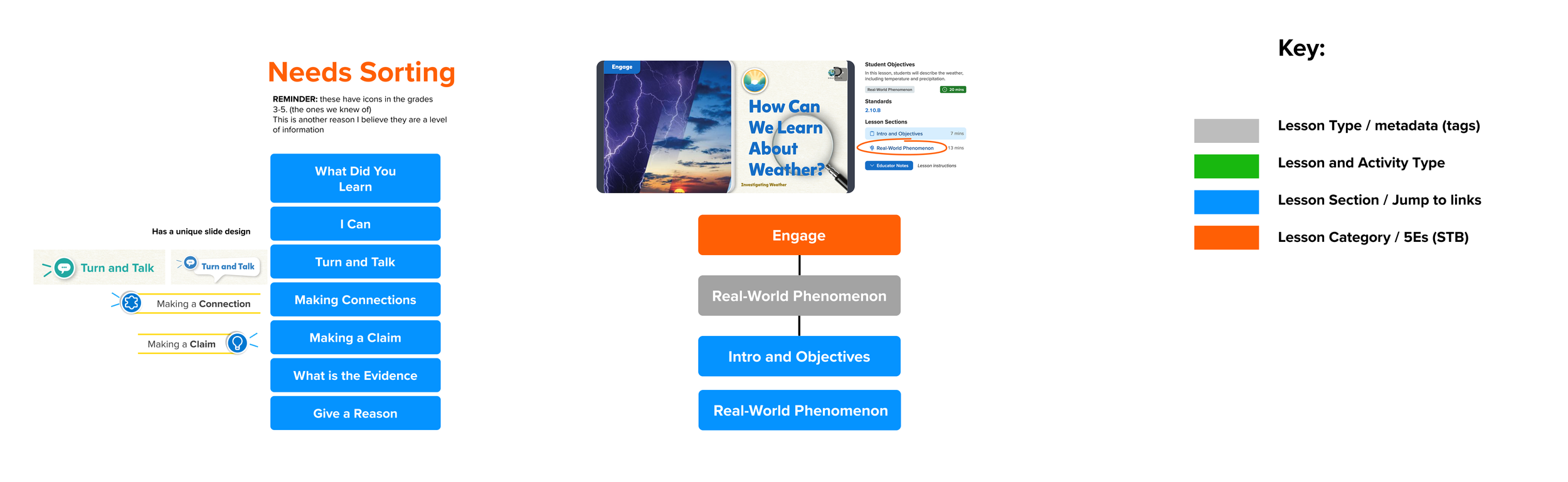
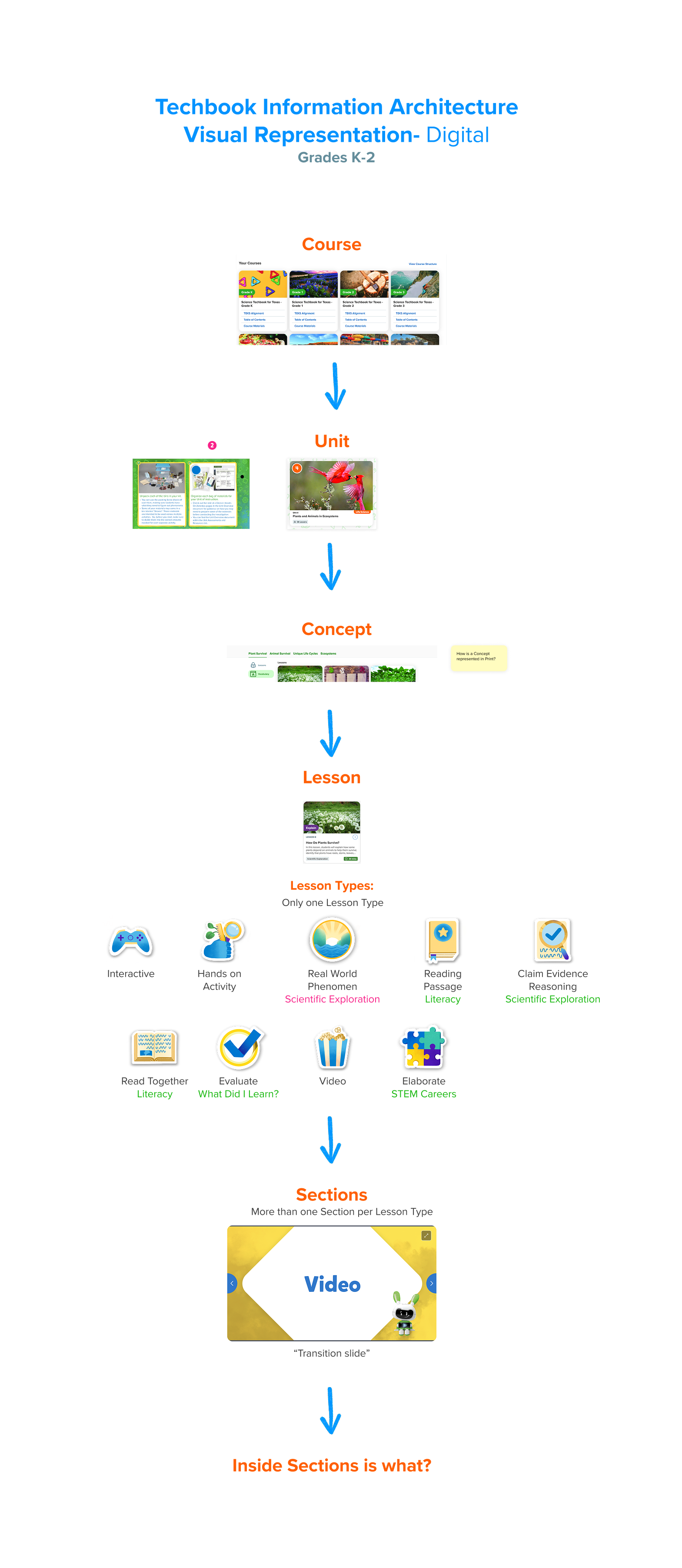
Next I broke down the information architecture creating visual elements to represent each layer of the flow, and then multiple representations through ideograms for the lesson types. Simultaneously I was working on brand look and feel for both grade band differentiation and that of the three sciences.
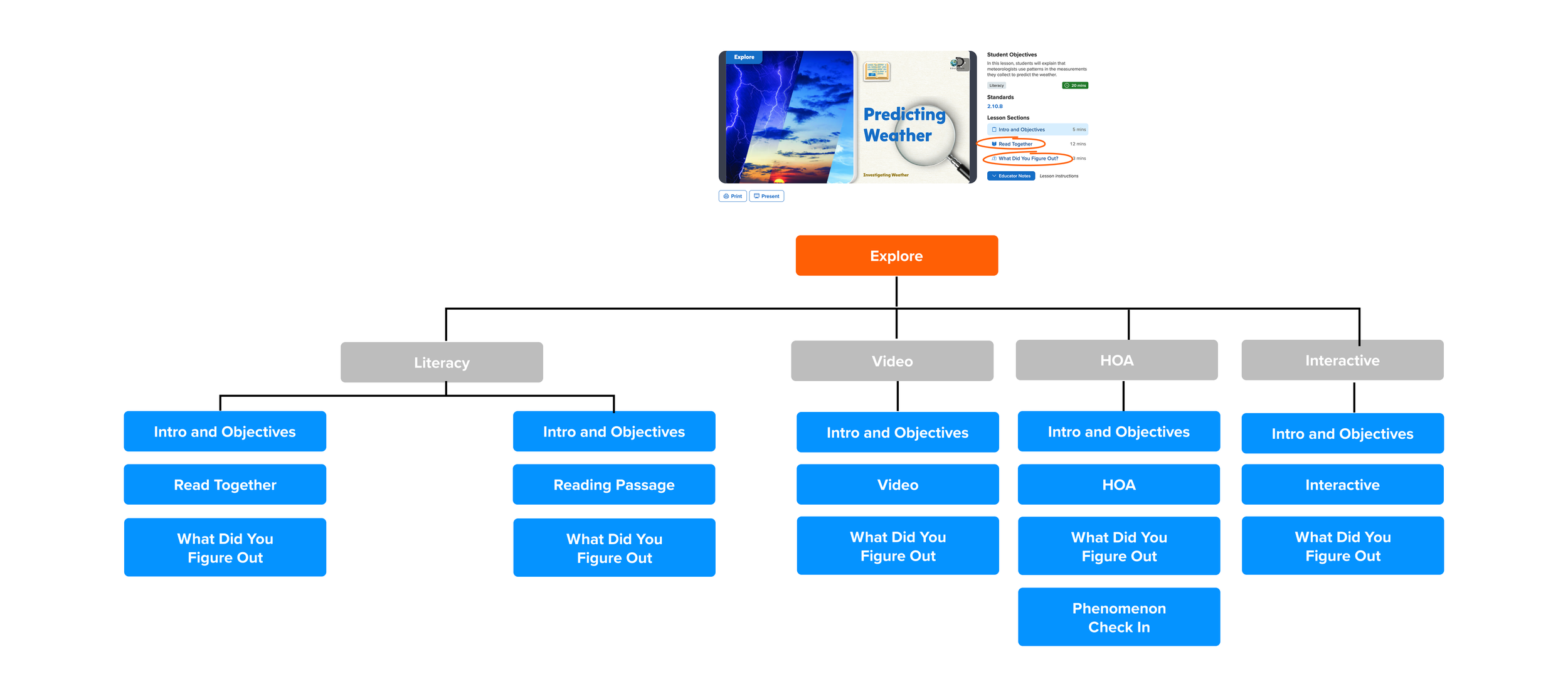
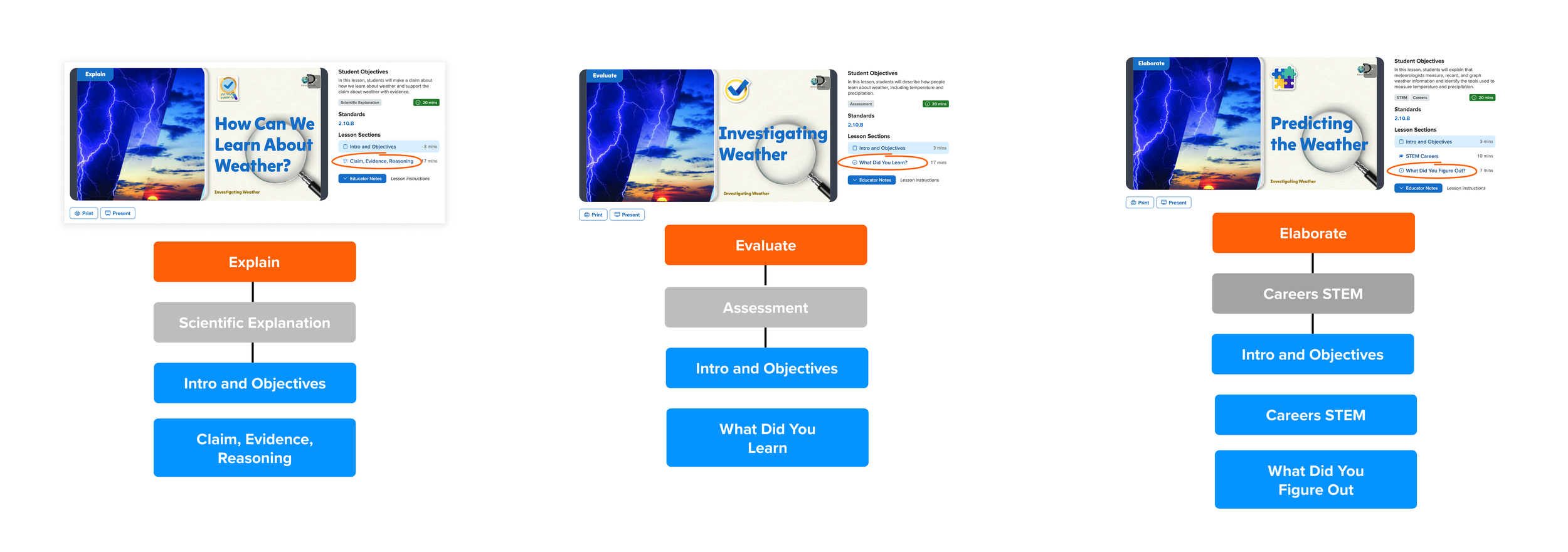
Mini Information Architecture Trees
I made small IA trees of every type of lesson to understand how Curriculum was thinking about how each lesson is taught in mini-sections. Until this was worked out, we could not move forward with a Visual Design System that would apply logically to each slide of the lessons.